Techcited Ltd

Recruitment

IT Recruitment vs General Recruitment: What's the Difference and Why It Matters
Recruitment

IT Recruitment vs General Recruitment: What’s the Difference and Why It Matters

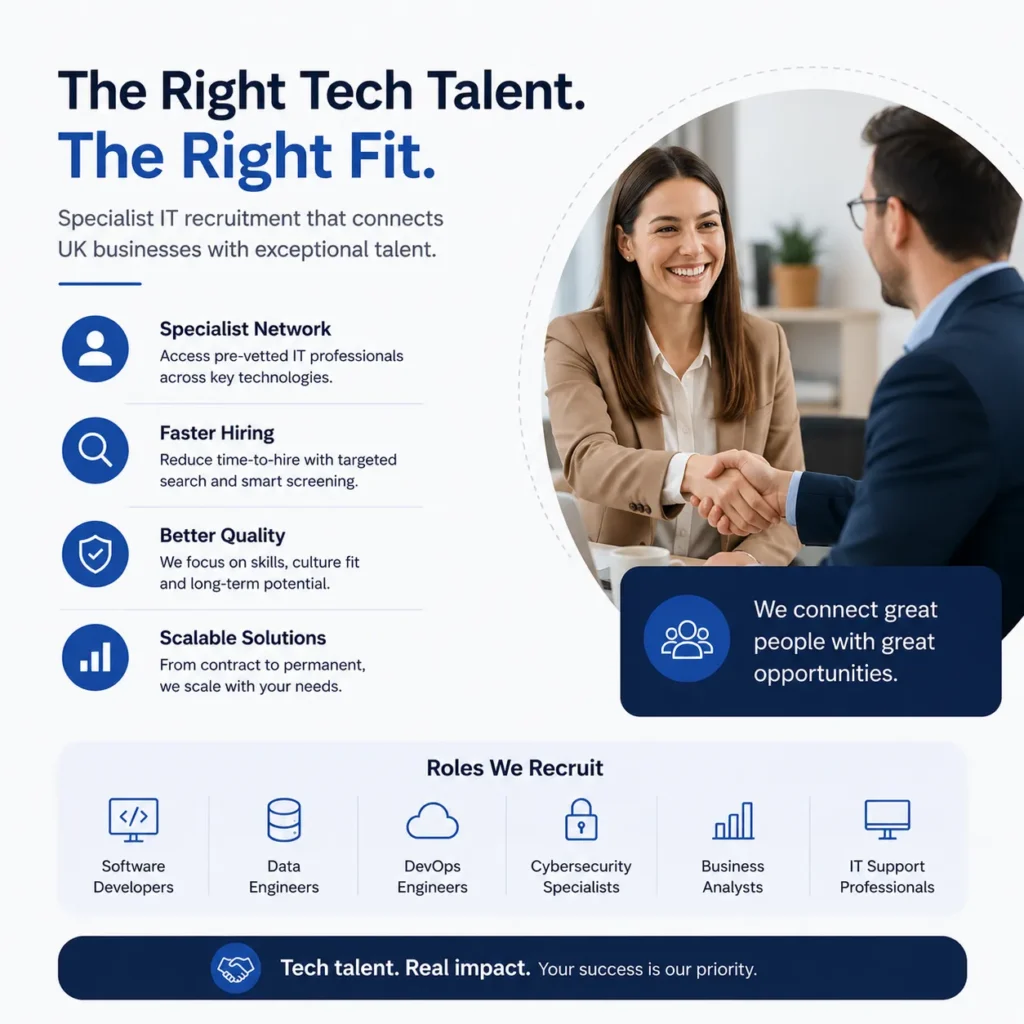
Not all recruitment agencies are created equal. While a general recruitment agency can cover a broad range of roles — from administration to sales to customer service — IT and technology recruitment is an entirely different discipline that requires a specific set of skills, knowledge, and networks. If your business is hiring for technical roles and you have been working with a generalist agency, this article will help you understand why making the switch to a specialist IT recruitment agency in the UK could dramatically improve your hiring outcomes. The Core Difference: Technical Literacy The most fundamental difference between IT recruitment and general recruitment is technical literacy. A specialist IT recruiter understands the difference between a front-end developer and a back-end developer. They know what React, Python, AWS, and Kubernetes actually mean in a real-world context. They can read a CV and quickly determine whether a candidate’s stated skills match the genuine requirements of the role. A generalist recruiter, however experienced they may be in sourcing, interviewing, and placing candidates, will struggle to accurately evaluate the technical credibility of a software developer’s CV without this domain knowledge. This means that candidates who look good on paper but lack real technical depth may be passed through to interview — wasting your time and slowing your hiring process. The Talent Pool Difference Specialist IT recruitment agencies spend years building relationships with tech professionals — software engineers, data scientists, DevOps engineers, QA specialists, and IT project managers. These candidates are rarely found on general job boards; instead, they are engaged through LinkedIn, GitHub, developer communities, and professional referrals. When you brief a specialist IT recruiter on a vacancy, they are not starting from scratch with a cold search. They are reaching into a warm network of pre-qualified, relationship-managed professionals who trust their recommendations. This translates directly into faster, better quality shortlists. Screening Quality in IT Recruitment General recruiters typically screen candidates through competency-based interviews that focus on communication, teamwork, and cultural fit. These are valuable but insufficient for technical roles. IT recruiters, by contrast, use a combination of technical screening calls, portfolio reviews, GitHub activity assessments, and practical coding challenges to verify that candidates possess the skills claimed on their CVs. This additional layer of technical pre-screening means that by the time a candidate reaches your hiring manager’s desk, their ability to do the job has already been independently validated. Speed and Efficiency Because specialist IT recruiters maintain active talent pipelines and know their candidate market deeply, they are typically able to fill technical roles faster than generalist agencies. In competitive hiring markets — such as the current UK tech landscape — speed matters enormously. The best candidates are often interviewing with multiple companies simultaneously, and delays in the recruitment process frequently result in losing top talent to competitors. When Should You Use a General vs IT Recruitment Agency? The Techcited Ltd Advantage Techcited Ltd is a Leicester-based IT and technology recruitment agency serving businesses across the UK. Our consultants have genuine technical backgrounds and stay up to date with the evolving tech landscape. We do not simply match keywords on CVs — we evaluate technical competency, cultural fit, and career motivation to ensure every placement is a genuine long-term success. We work with start-ups, SMEs, and larger organisations across sectors including software development, fintech, health tech, and digital agencies, providing both permanent and contract recruitment solutions. Frequently Asked Questions Q: What technical roles does Techcited Ltd specialise in recruiting for? A: We specialise in software development (front-end, back-end, full-stack), mobile app development, data engineering and analytics, cloud and DevOps, IT project management, cybersecurity, and digital marketing professionals. Q: Do specialist IT recruitment agencies charge more than general agencies? A: Fees are comparable. The added value of specialist IT recruitment lies not in lower fees but in significantly better candidate quality, faster shortlisting, and a lower risk of costly mis-hires — which ultimately saves businesses far more than any fee difference. Q: Can Techcited Ltd help with urgent or short-notice IT contract hires? A: Yes. We maintain an active pool of contract and interim IT professionals who are available to start at short notice. Contact our team to discuss your urgent requirement and we will aim to present candidates within 48–72 hours. Ready to get started? Need to hire IT or technology professionals in Leicester or across the UK? Get in touch with the Techcited Ltd specialist recruitment team for a no-obligation discussion.
Digital Transformation in Action: How UK Businesses Are Growing Online in 2026
Recruitment

Digital Transformation in Action: How UK Businesses Are Growing Online in 2026

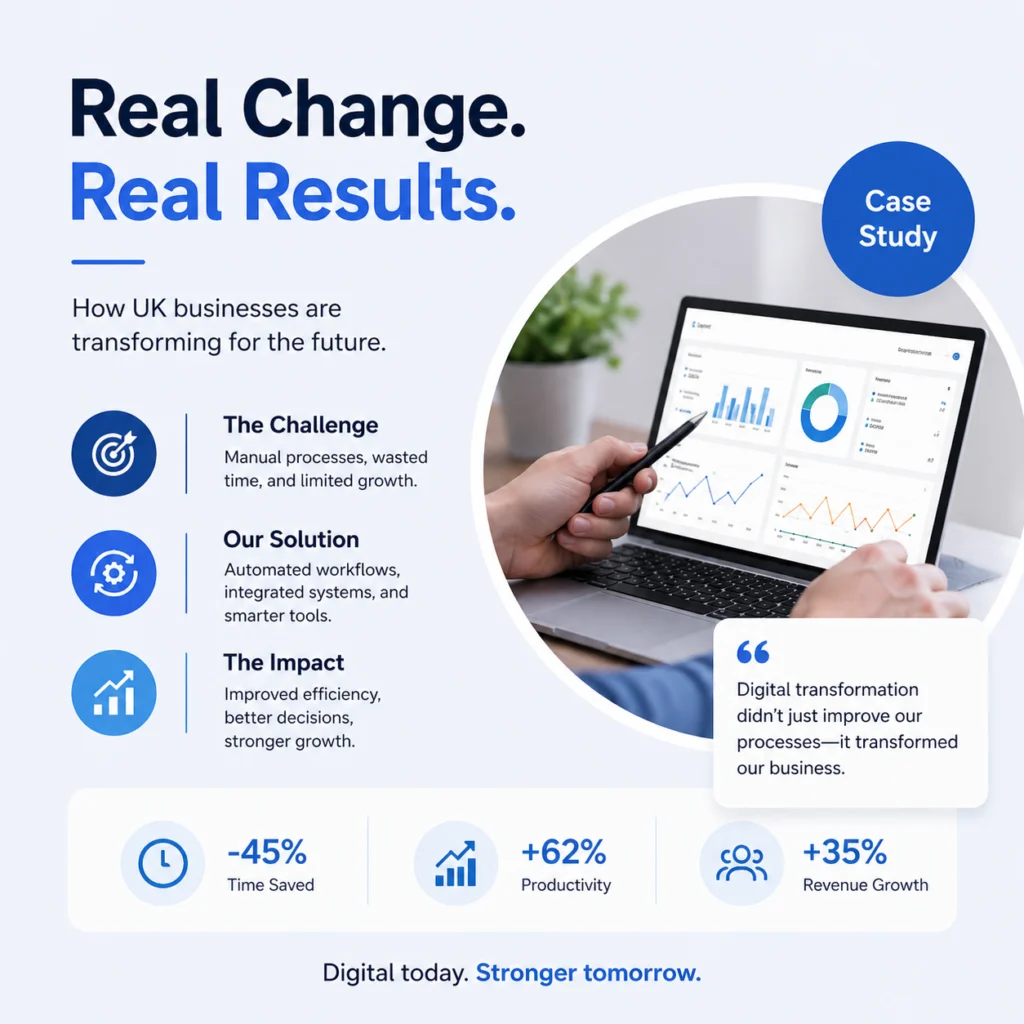
Digital transformation can sound abstract when discussed in theoretical terms. The concept becomes far more tangible — and far more compelling — when examined through the lens of real businesses that have made specific technology investments and measured the outcomes. In this post, we explore a series of digital transformation scenarios illustrating how UK businesses across different sectors are using technology to improve operations, enhance customer experience, and drive measurable growth in 2026. Scenario 1: The Local Service Business That Went Digital A Leicester-based facilities management company was managing all their client bookings through phone calls, paper job sheets, and spreadsheets. Their field team had no real-time access to job updates. Invoicing was delayed by days while paper records were transcribed. Their digital transformation involved: implementing a cloud-based field service management platform, integrating it with their accounting software via API, developing a simple client portal for booking and job tracking, and equipping their field team with mobile devices running the management app. The outcome: administrative time reduced by 40%, invoice payment timelines shortened by 8 days, client satisfaction scores increased significantly, and the business scaled its client base by 35% in the following year without increasing administrative headcount. Scenario 2: The Retailer That Built a Revenue-Generating Website A specialist East Midlands retailer was entirely dependent on their physical store and local customer base. Their previous website was five years old, not mobile-responsive, and generated no online sales. Techcited Ltd rebuilt their website on a modern Shopify platform with professional product photography, optimised descriptions, and a full SEO programme. Social media advertising was layered on top, targeting audiences with demonstrated interest in their product category. Within six months, online revenue accounted for 28% of total business turnover, including a growing number of orders from customers in other UK regions they had never previously reached. Scenario 3: The Professional Services Firm That Automated Lead Nurturing A professional services firm was struggling to follow up with leads consistently. Their sales process relied on individual team members remembering to send follow-up emails — which inevitably fell through the cracks when the team was busy. Their digital transformation: implementing a CRM with integrated email marketing automation, creating a structured lead nurturing sequence triggered by website form submissions, and building a content library of valuable guides that were automatically delivered to prospects over a 6-week period. Lead-to-client conversion rate improved by 23% within three months, and the sales team reported significantly more qualified, better-informed prospects entering the proposal stage. Key Lessons From These Transformations How Techcited Ltd Supports Your Digital Transformation Every business’s digital transformation journey is unique. At Techcited Ltd, we begin by understanding your specific challenges, goals, and current technology landscape — then develop a practical, phased transformation roadmap that delivers measurable outcomes at each stage. From website rebuilds and eCommerce development to CRM implementation, API integration, and digital marketing, we provide the full range of technology and marketing services needed to support meaningful business transformation. Frequently Asked Questions Q: Is digital transformation affordable for a UK small business with a limited budget? A: Yes. The most impactful digital transformation investments for small businesses — cloud-based tools, website optimisation, marketing automation, and API integration — are often highly affordable, particularly relative to the operational savings and revenue growth they generate. Q: How do I know if my business is ready for digital transformation? A: If your business is losing time to manual processes, struggling to scale because of technology limitations, or being outcompeted by more digitally capable businesses, you are not just ready for digital transformation — you need it. Contact Techcited Ltd for an honest assessment. Q: Can Techcited Ltd work with my existing technology stack or does everything need to be replaced? A: We work with what you have wherever possible. Digital transformation does not require starting from scratch — often the most cost-effective approach is augmenting and integrating your existing systems rather than replacing them entirely. Ready to get started? Ready to begin your digital transformation journey? Techcited Ltd is your partner for practical, results-focused digital transformation. Contact us today for a free initial consultation. Visit: Digital marketing agency

Google Ads for Small Businesses in the UK: Is It Worth the Investment in 2026?
Recruitment

Google Ads for Small Businesses in the UK: Is It Worth the Investment in 2026?

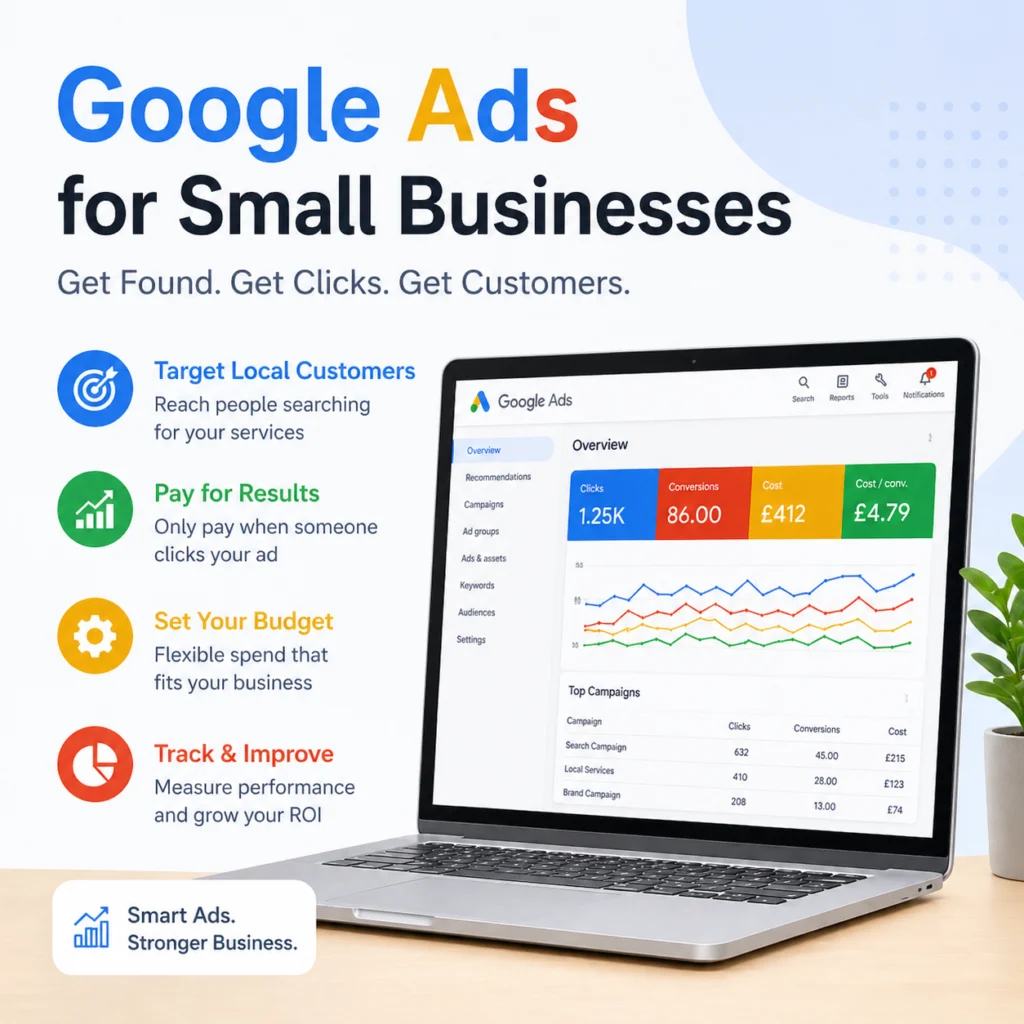
Google Ads (formerly Google AdWords) is the world’s largest paid digital advertising platform — and one of the most misunderstood by small business owners. Many SMEs have tried Google Ads, spent their budget quickly, generated few conversions, and concluded that it does not work for businesses of their size. In almost every case, the problem was not the platform. It was the setup and management of the campaigns. When managed correctly, Google Ads Search campaigns can be one of the most effective lead generation tools available to UK small businesses — delivering qualified, high-intent traffic immediately, with precisely controlled budget allocation. This guide explains how to make Google Ads work for your business in 2026. How Google Ads Search Works When someone types a search query into Google, Google runs a real-time auction to determine which ads appear and in which order. Your bid for a keyword, multiplied by your Quality Score (a measure of your ad’s relevance and your landing page’s quality), determines your Ad Rank. Higher Ad Rank means higher placement and lower cost per click. This auction happens millions of times every day for queries relevant to UK businesses — and for businesses that bid intelligently on the right keywords, it delivers a continuous stream of high-intent, ready-to-buy visitors. The Most Common Google Ads Mistakes Small Businesses Make Bidding on Broad, Unqualified Keywords Bidding on very broad keywords (e.g., just ‘website’) will generate enormous volumes of irrelevant impressions and clicks. Target specific, intent-rich keyword phrases (e.g., ‘web development agency Leicester’, ‘small business website design UK’) that signal genuine purchase intent. Sending All Traffic to the Homepage A homepage is designed for broad audiences. Ad traffic should go to a specific landing page designed around the keyword and ad message — with a clear headline, relevant content, and a single conversion-focused call-to-action. This dramatically improves Quality Scores and conversion rates. Not Using Negative Keywords Negative keywords prevent your ads from showing for irrelevant searches. Without a robust negative keyword list, your budget is wasted on clicks from people searching for something you do not offer (e.g., ‘free website’, ‘website templates DIY’). Setting and Forgetting Google Ads require ongoing management — weekly at minimum. Search term reports reveal new negative keywords to add, bid adjustments based on performance data, A/B testing of ad copy, and landing page optimisation based on conversion behaviour. Unmanaged campaigns almost always underperform significantly. What Budget Do You Need for Google Ads in the UK? For local Leicester service businesses, a realistic starting budget is £500–£800 per month in ad spend. National campaigns or competitive sectors (legal, financial services, IT) require higher budgets to achieve meaningful scale. Always add a management fee (typically 10–20% of ad spend) if working with an agency. Frequently Asked Questions Q: How quickly can Google Ads generate leads for a UK small business? A: Google Ads can generate clicks and leads from day one of campaign activation. However, most campaigns require 4–8 weeks of learning and optimisation before reaching their optimal performance — the algorithm needs data to identify your best-performing audience segments and ad combinations. Q: Should I manage Google Ads myself or use an agency? A: For campaigns under £500/month, self-management with careful study of Google’s certification training is feasible. Above this level — particularly in competitive sectors — professional management by a certified agency typically delivers significantly better ROI than amateur management. Q: Is Techcited Ltd a certified Google Ads partner? A: Contact our digital marketing team for details of our paid advertising credentials and case studies. We provide Google Ads management as part of our integrated digital marketing service. Ready to get started? Let Techcited Ltd manage your Google Ads campaigns and ensure every pound of your budget is working as hard as possible. Get in touch for a free paid advertising audit. Visit: Digital marketing agency

How to Measure Your Digital Marketing ROI
Recruitment

How to Measure Your Digital Marketing ROI: A Practical Guide for UK Businesses in 2026

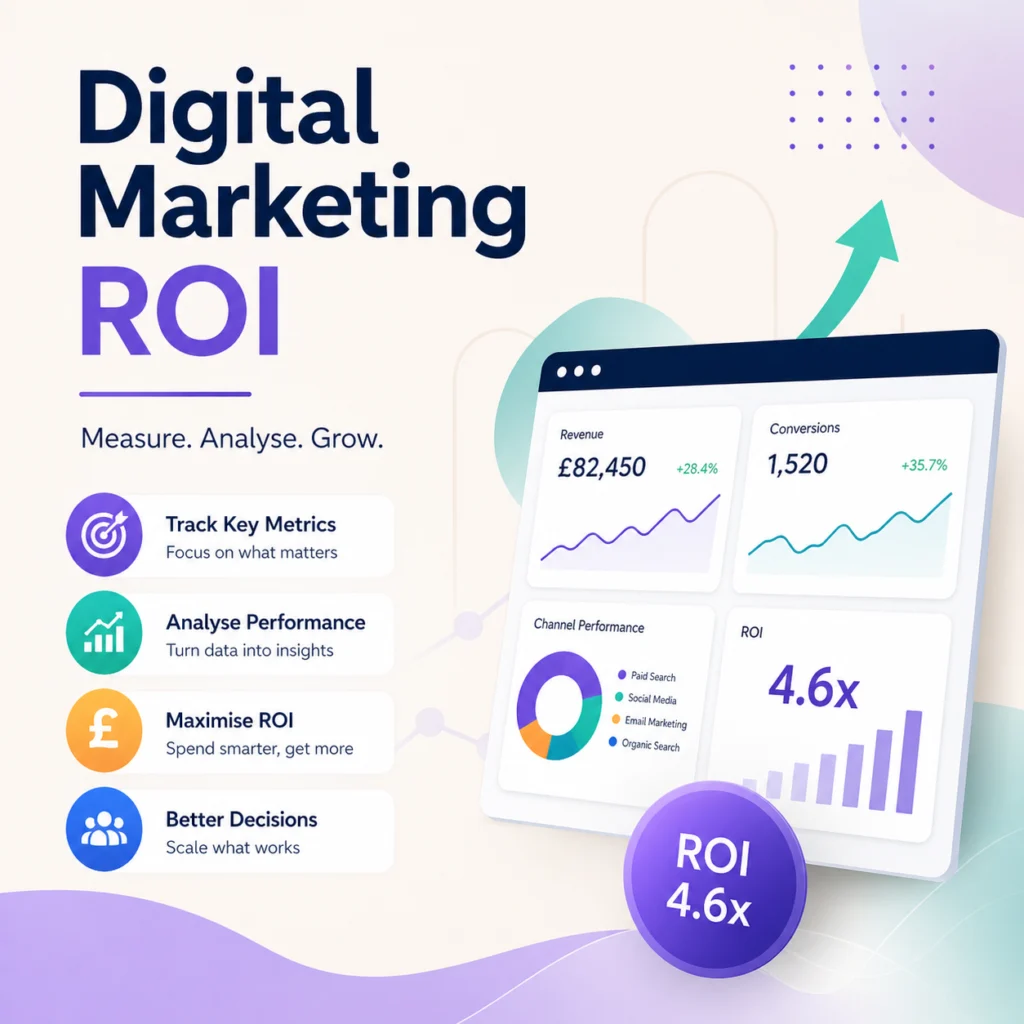
Investing in digital marketing without measuring its return is the equivalent of running a business without financial reporting. You may be generating activity, but without the right measurement framework, you have no reliable way to know what is working, what is not, and where to invest more or less. For UK business owners who want to ensure their digital marketing investment is delivering real commercial value, this guide provides a practical measurement framework designed for 2026’s analytics landscape. Start With Google Analytics 4: Your Core Measurement Platform Google Analytics 4 (GA4) is the current standard for website performance measurement and is both free and powerful. If you have not yet migrated from Universal Analytics (which was discontinued in 2023) to GA4, this is an immediate priority. Ensure GA4 is correctly installed on your website and that enhanced measurement is enabled to automatically track key interactions. Define Your Conversion Goals Before you can measure marketing ROI, you need to define what a conversion is for your business. For service businesses: a contact form submission, a phone call (using call tracking), a live chat engagement, or a consultation booking. For eCommerce: a completed purchase. For content-driven sites: an email newsletter subscription or gated content download. Set up all relevant conversion events in GA4 and mark them as Key Events. Without conversion tracking, you can only measure visits — not business outcomes. The Metrics That Actually Matter for Marketing ROI Cost Per Acquisition (CPA) For paid channels, calculate CPA by dividing total channel spend by the number of conversions generated. Compare this across channels (Google Ads, Facebook Ads, LinkedIn Ads) to identify where your paid budget generates the best return. Organic Conversion Rate The percentage of organic search visitors who take a desired action. Monitor this in GA4 (Acquisition > Traffic Acquisition, segment by Organic Search). A rising organic conversion rate alongside growing organic traffic is the strongest possible SEO performance signal. Customer Lifetime Value (CLV) Understanding the long-term value of a customer acquired through each channel allows you to make more accurate ROI judgements. A channel that acquires customers at higher CPA but with higher CLV may be more profitable than a lower-CPA channel with lower-value customers. Attribution: Understanding the Customer Journey Most conversions involve multiple touchpoints before a customer makes contact or completes a purchase. A prospect might find you through an organic search, visit your site twice, see a LinkedIn ad, then directly type your URL before enquiring. GA4’s default data-driven attribution model distributes conversion credit across all touchpoints — providing a more accurate picture of each channel’s contribution than last-click attribution. Monthly Reporting: What to Review and When Establish a monthly marketing performance review covering organic traffic trend, keyword ranking movements, conversion rate by channel, CPA for paid channels, email open and click rates, and social media reach and engagement. This monthly cadence provides enough data to identify trends without creating unnecessary noise from day-to-day fluctuations. Frequently Asked Questions Q: What is a good conversion rate for a UK small business website? A: Average website conversion rates vary widely by industry and traffic quality. For professional services, 2–5% is a reasonable benchmark. For eCommerce, 1–3% is typical. If your conversion rate is significantly below these benchmarks, UX and CRO (Conversion Rate Optimisation) investment is likely warranted. Q: Is Google Analytics 4 free to use? A: Yes. The standard version of Google Analytics 4 is completely free to use, with no data limits for most business sizes. Google Analytics 4 360 (the enterprise version) is a paid product but is relevant only for very large websites. Q: Can Techcited Ltd set up GA4 and provide monthly digital marketing performance reports? A: Yes. We provide GA4 configuration, goal setup, and monthly marketing performance reporting as part of our digital marketing management service. Ready to get started? Stop guessing and start knowing. Techcited Ltd sets up the right measurement framework and provides clear monthly reports that show exactly what your digital marketing is delivering. Visit: Digital marketing agency

Scroll to Top