Techcited Ltd

Uncategorized

Local SEO for Leicester Businesses: How to Rank on Google Maps in 2026
Uncategorized

Local SEO for Leicester Businesses: How to Rank on Google Maps in 2026

When someone in Leicester searches for ‘accountant near me’, ‘web developer Leicester’, or ‘IT support Leicester’, Google displays a Local Pack — typically three businesses shown on a map at the top of the results page, above the organic listings. Appearing in this Local Pack is one of the most valuable positions available in local digital marketing: it captures searchers with immediate purchase intent and generates direct clicks, calls, and directions requests. This comprehensive guide covers every element of local SEO for Leicester businesses and explains exactly what you need to do to achieve and maintain strong Local Pack and local organic rankings in 2026. Google Business Profile: The Foundation of Local SEO Your Google Business Profile (GBP) — formerly Google My Business — is the single most important element of your local SEO. It is the source of the information Google displays in the Local Pack and on Google Maps: your business name, address, phone number, opening hours, category, reviews, photos, and posts. Ensure your GBP is: completely and accurately filled in across all sections, verified with a physical Leicester address, categorised correctly (choosing your most specific primary category and all relevant secondary categories), enriched with high-quality photos of your premises, team, and work, and kept consistently updated with posts, offers, and business hour changes. Consistent NAP Information Across the Web Google cross-references your Name, Address, and Phone number (NAP) across hundreds of online directories, review sites, and social platforms to verify your business’s legitimacy and location. Any inconsistency — a slightly different address format, an old phone number, a name variant — undermines the local authority signals Google uses to rank local businesses. Conduct an audit of your NAP information across: your website, Google Business Profile, Bing Places, Yell.com, Thomson Local, Facebook, LinkedIn, FreeIndex, and any industry-specific directories. Correct all inconsistencies. Reviews: The Local Ranking Signal You Cannot Buy Customer reviews are one of the strongest signals in local SEO ranking algorithms. Volume, recency, average rating, and the presence of keyword-relevant content in reviews all influence your local rankings. Develop a systematic approach to asking satisfied customers for Google reviews — this is one of the highest-impact local SEO activities you can engage in consistently. Respond to all reviews — positive and negative — promptly and professionally. Responses to reviews are also indexed by Google and demonstrate business engagement. On-Site Local SEO: Your Website’s Role Your website reinforces your local signals. Include your full Leicester address and phone number in your website footer and Contact page. Create location-specific service pages if you serve multiple geographic areas. Include references to Leicester, the East Midlands, and specific service areas within your content naturally. Embed a Google Map on your contact page using your GBP listing. Local Link Building Earning links from other Leicester and UK websites — local news sites, business associations, chambers of commerce, industry directories, and partner businesses — signals to Google that your business is a credible local entity. Joining the Leicester and Leicestershire Chamber of Commerce, for example, provides both a valuable link and a credible local business association signal. Frequently Asked Questions Q: How long does local SEO take to show results for a Leicester business? A: With a well-optimised Google Business Profile and consistent review acquisition, many Leicester businesses begin seeing improved local pack visibility within 4–8 weeks. Fully competitive local rankings for contested keywords typically take 3–6 months of consistent effort. Q: Do I need a physical Leicester address to rank in Leicester local search results? A: Google’s Local Pack typically requires a verified physical address within the geographic area being searched. However, a strong local SEO presence — including location-specific content on your website — can support local organic (non-map) rankings even for businesses serving Leicester remotely. Q: Can Techcited Ltd manage our local SEO for Leicester and the surrounding area? A: Yes. Our local SEO service covers Google Business Profile optimisation, citation building, review strategy, and location-specific content creation — everything needed to improve your local search visibility. Ready to get started? Dominate local search in Leicester with Techcited Ltd’s local SEO service. Contact us for a free local SEO audit and find out exactly where your opportunities lie.Visit: Digital marketing agency

How Video Marketing Can Boost Your Brand Awareness and Sales in 2026
Uncategorized

How Video Marketing Can Boost Your Brand Awareness and Sales in 2026

Video has established itself as the dominant content format across digital marketing channels. UK consumers now watch an average of over 3 hours of online video per day. Social media platforms consistently prioritise video in their algorithms. Google surfaces video content prominently in search results. And conversion rates on landing pages with video consistently outperform those with static images and text alone. For UK businesses that have not yet invested meaningfully in video marketing, 2026 represents a compelling opportunity — and a closing window before competitors establish insurmountable video content advantages. Why Video Works: The Science of Visual Storytelling Human brains process visual information 60,000 times faster than text. Viewers retain approximately 95% of a message delivered via video, compared to just 10% when reading the same information in text form. This cognitive advantage makes video uniquely powerful for brand introduction, product demonstration, customer testimonials, and complex service explanation. The Types of Video Content That Drive Results for UK Businesses Explainer Videos Short (60–120 second) animated or live-action videos that explain your service, product, or process clearly and engagingly. Ideal for website homepages, landing pages, and social media introduction. Typically one of the highest-conversion video formats for B2B services. Customer Testimonial Videos Authentic video testimonials from real customers — describing their challenge, their experience with your business, and the results they achieved — are among the most powerful conversion tools available. They provide social proof in the most credible possible format: a real person’s genuine story. Educational and How-To Content Short educational videos that address your audience’s questions and challenges build brand authority, generate search traffic (YouTube is the world’s second largest search engine), and create meaningful touchpoints with potential customers before they are ready to buy. Short-Form Social Video (Reels, TikTok, Shorts) Short-form vertical video content for Instagram Reels, TikTok, and YouTube Shorts currently delivers the highest organic reach of any social media content format. Even a mobile-filmed, unedited short video that provides genuine value can achieve significant reach for brands across all sizes. Getting Started With Video Marketing on a Small Business Budget Professional video production does not require large budgets to be effective. A modern smartphone, a simple ring light (£30), a basic tripod, and a free video editing app (CapCut, DaVinci Resolve) are sufficient to produce high-quality short-form content. The key variable is content quality and authenticity — not production value. Techcited Ltd’s Video Marketing and Design Services Techcited Ltd provides video production, motion graphics, and video marketing strategy services as part of our wider digital marketing offering. From brand explainer videos to social media content programmes, we help UK businesses harness the power of video to grow their audiences and convert more customers. Frequently Asked Questions Q: What type of video should a UK small business create first? A: Start with a 90-second homepage explainer video that clearly describes who you are, what you offer, who you help, and why you are different. This single piece of content improves website conversion rate immediately and can be repurposed across social media and email marketing. Q: Does video content improve Google rankings? A: Yes. Pages with embedded video are 53 times more likely to appear on Google’s first page. Video increases time on page, reduces bounce rate, and Google actively indexes YouTube videos in search results. A YouTube presence that embeds videos on your site provides both direct search visibility and website SEO benefits. Q: How much does professional video production cost for a UK small business? A: A professionally produced 60–90 second brand explainer video from a quality production company typically costs £1,000–£5,000. Social media video content programmes can be structured at various price points depending on volume and complexity. Ready to get started?Let Techcited Ltd help you develop a video marketing strategy and create content that grows your brand and drives sales. Contact us to discuss your video marketing goals.Visit: Digital marketing agency

What Is UI/UX Design and Why Does It Matter for Your Business in 2026?
Uncategorized

What Is UI/UX Design and Why Does It Matter for Your Business in 2026?

UI/UX design is one of the most frequently discussed but least well understood disciplines in the digital business world. Business owners regularly encounter the terms — and hear designers advocate passionately for their importance — without having a clear sense of what UI and UX actually mean, why they are distinct, and how they affect real business outcomes. This guide provides a clear, practical explanation of both disciplines and makes the case for why investing in quality UI/UX design delivers measurable commercial returns. What Is UX Design? UX stands for User Experience. UX design is the practice of designing digital products and services to be as useful, accessible, and enjoyable as possible for the people who use them. A UX designer thinks from the user’s perspective: how does a customer navigate your website when looking for specific information? Where do they get confused or frustrated? What would make the journey from first visit to completed purchase faster and more satisfying? UX design encompasses research (understanding user behaviour and needs), information architecture (how content is structured and organised), interaction design (how users navigate and interact with elements), and usability testing (observing real users to identify friction points). What Is UI Design? UI stands for User Interface. UI design is the visual and interactive layer of a digital product — the colours, typography, buttons, icons, forms, spacing, and visual hierarchy that users see and interact with. A UI designer makes a product beautiful, clear, and consistent — creating visual design systems that communicate brand identity and guide users intuitively through an interface. Why Good UI/UX Design Directly Impacts Your Business Outcomes The business case for quality UI/UX design is straightforward and well evidenced. Research from Forrester shows that a well-designed UX can increase conversion rates by up to 400%. McKinsey’s Design Index found that companies in the top quartile of design performance outperformed industry benchmarks by 2:1 on revenue growth. For most UK businesses, the most direct impact of poor UI/UX is on website conversion rate — the percentage of visitors who take a desired action (enquire, buy, book, call). A confusing navigation, unclear calls-to-action, poor mobile experience, or visually dated design directly reduce this percentage, costing your business revenue on every visit. Signs Your Business Needs UI/UX Improvement UI/UX Design at Techcited Ltd Techcited Ltd provides professional UI/UX design services for websites and mobile applications. Our design process is user-centred and commercially focused — we design for your target customer’s behaviour, your brand identity, and your conversion goals simultaneously. Frequently Asked Questions Q: Is UI/UX design only relevant for apps or does it apply to websites too? A: UI/UX principles apply equally to websites and apps. In fact, for most UK businesses, website UX improvement delivers faster measurable commercial returns because website traffic volumes are typically higher than app user bases. Q: How is UI/UX design different from graphic design? A: Graphic design focuses on visual communication — creating logos, brand materials, and static visual assets. UI/UX design focuses specifically on digital product interfaces — how users interact with screens, what information they need where, and how visual design guides behaviour in interactive environments. Q: Does Techcited Ltd offer standalone UI/UX design as well as full web development? A: Yes. We offer UI/UX design as both a standalone service (design deliverables for your existing development team to implement) and as an integrated part of our web and app development service. Ready to get started?Transform your website or app with professional UI/UX design from Techcited Ltd. Contact us to discuss how better design can improve your conversion rates and customer experience. Visit: Digital marketing agency

Email Marketing in 2026: Is It Still Worth It for UK Businesses?
Uncategorized

Email Marketing in 2026: Is It Still Worth It for UK Businesses?

With the proliferation of social media, instant messaging platforms, and new digital marketing channels, a common question among UK business owners is whether email marketing is still a worthwhile investment. The answer, supported by consistent and compelling data, is an unequivocal yes. Email marketing continues to deliver the highest ROI of any digital marketing channel. According to the Data and Marketing Association (DMA), email marketing in the UK delivers an average return of £42 for every £1 spent — outperforming social media, paid search, and content marketing on a pure ROI basis. Why Email Marketing Works in 2026 Unlike social media — where your posts compete against algorithm curation and are seen by only a fraction of your followers — an email lands directly in your subscriber’s inbox. They have actively opted in to receive your communications. This permission-based relationship creates a fundamentally different — and more valuable — engagement dynamic than any social platform can replicate. Email also reaches people in a personal, uncluttered environment with no competitive distraction from other brands. When an email from your business appears in someone’s inbox, you have their attention for the few seconds it takes them to decide whether to open it — an opportunity no other channel provides at the same cost. Building an Effective Email Marketing Strategy in 2026 1. Build a Permission-Based Subscriber List Never buy email lists. The ROI of permission-based email marketing depends entirely on the quality and relevance of your list. Build yours through: website sign-up forms with a compelling lead magnet, gated content (guides, templates, webinars), event registrations, and direct opt-in from customers at the point of sale or service delivery. 2. Segment Your Audience Generic emails to your entire list consistently underperform segmented campaigns. Divide your list by customer type, purchase history, industry, geographic location, or engagement level, and tailor your messages accordingly. Even basic segmentation — separating customers from prospects — can double open and click rates. 3. Focus on Subject Lines Your subject line determines whether your email is opened. It is the single most impactful element of any email campaign. Test different approaches: questions, numbers, urgency, personalisation (including the recipient’s name), and curiosity-generating statements. A/B testing subject lines on every campaign progressively improves your open rates over time. 4. Provide Genuine Value in Every Email The most successful email programmes consistently provide useful, relevant content — not just promotional messages. A 4:1 ratio of value-adding content to promotional messages is a widely recommended benchmark. When your subscribers look forward to receiving your emails because they consistently deliver useful information, your engagement rates and conversion rates reflect it. 5. Optimise for Mobile Over 60% of UK emails are opened on mobile devices. Use mobile-responsive email templates, concise subject lines (under 50 characters for full mobile preview), clear single-column layouts, and large call-to-action buttons that are easy to tap on a small screen. Frequently Asked Questions Q: What email marketing platform should a UK small business use? A: Mailchimp is widely used and has a generous free tier suitable for small lists. For more advanced automation, Klaviyo (particularly for eCommerce), HubSpot, or Active Campaign are excellent choices. Platform selection should be driven by your list size, automation needs, and integration requirements. Q: How often should a UK small business send marketing emails? A: For most B2B businesses, a weekly or fortnightly newsletter is optimal. For eCommerce, weekly promotional emails plus automated trigger emails (welcome series, abandoned cart, post-purchase) are standard best practice. The right frequency is the one that maximises value for your audience without driving unsubscribes. Q: Does Techcited Ltd provide email marketing campaign management? A: Yes. Our digital marketing service includes email strategy, template design, campaign copywriting, list management, and performance reporting. Contact us to discuss how email marketing can work for your business. Ready to get started?Build an email marketing programme that generates consistent revenue for your UK business. Techcited Ltd manages campaigns that engage, nurture, and convert. Get in touch today. Visit: Digital marketing agency

How to Create a Content Marketing Strategy That Generates Leads in the UK in 2026
Uncategorized

How to Create a Content Marketing Strategy That Generates Leads in the UK in 2026

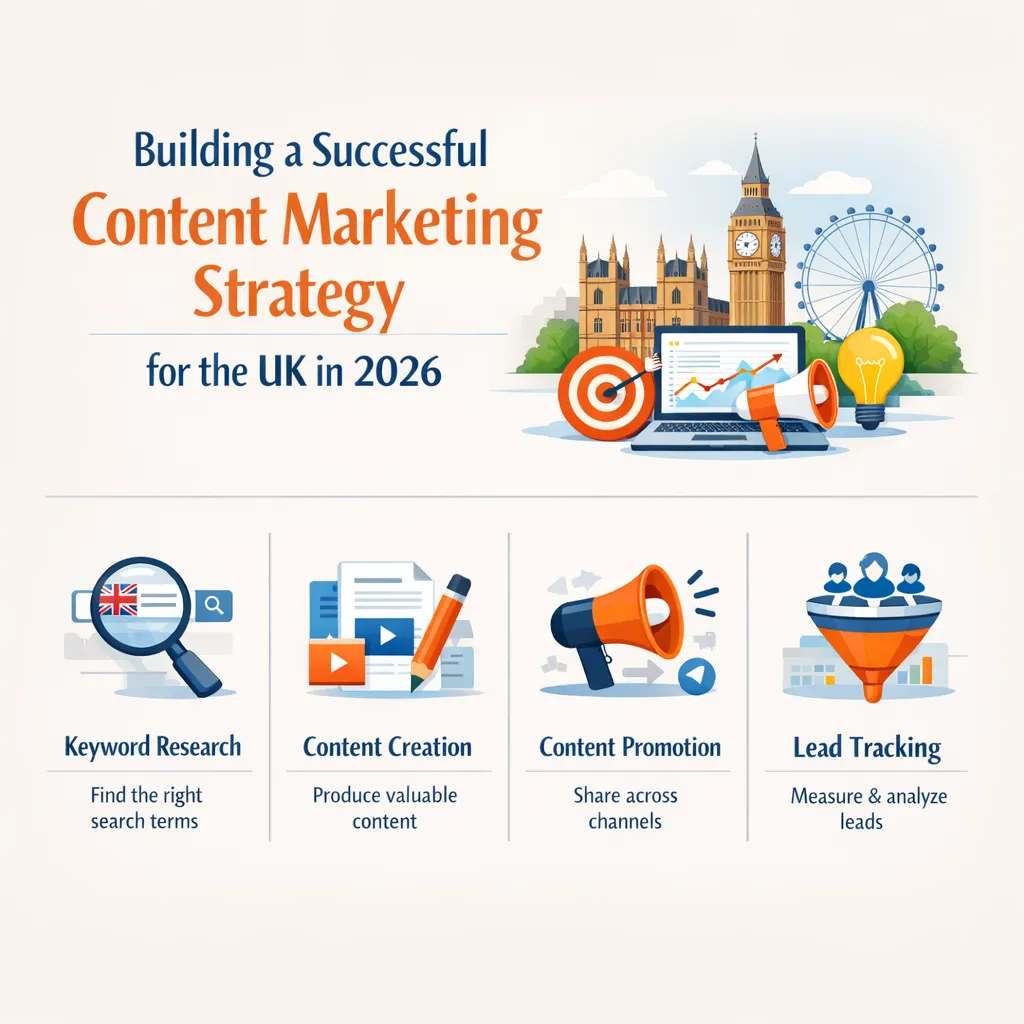
Content marketing — the practice of creating and distributing genuinely valuable content to attract and retain a clearly defined audience — is consistently one of the highest-ROI marketing investments available to UK businesses in 2026. According to the Content Marketing Institute, content marketing costs 62% less than traditional outbound marketing while generating approximately 3 times as many leads. But effective content marketing requires a strategic approach, not just the production of content. This guide provides a practical framework for building a content marketing strategy that consistently attracts qualified visitors and converts them into leads for your UK business. Step 1: Define Your Content Marketing Goals Before creating a single piece of content, define what you want content marketing to achieve for your business. Common goals include: increasing organic search traffic, generating qualified leads, building brand authority in your sector, nurturing leads who are not yet ready to buy, and supporting the sales process with relevant educational materials. Your goals determine your content types, topics, and distribution approach. Step 2: Research Your Audience’s Questions and Search Behaviour Your content should answer the questions your target customers are actively asking. Use tools such as Google Search Console (to see what searches already bring people to your site), AnswerThePublic, and Semrush or Ahrefs keyword research tools to identify the specific questions, problems, and topics your audience searches for. Build a content topic map that covers awareness-stage content (general information and education), consideration-stage content (comparing options, evaluating solutions), and decision-stage content (specific to your service or product). Step 3: Create a Content Calendar Consistency is the most critical variable in content marketing success. An achievable, maintained publishing schedule of 2 pieces of quality content per week significantly outperforms a burst of 20 posts followed by three months of silence. Build a quarterly content calendar with topics, keywords, formats, and publication dates assigned in advance. Step 4: Optimise Every Piece of Content for SEO Every piece of content you create should target a specific keyword, include that keyword naturally in the title, headings, and body text, be structured with clear heading hierarchy (H1, H2, H3), and include internal links to relevant service pages and related content. Add a meta description that entices clicks and reflects the content’s value. Step 5: Distribute and Promote Your Content Publishing content on your website is only the first distribution channel. Each piece of content should also be shared on relevant social media platforms, featured in your email newsletter, and potentially repurposed in different formats — a blog post becomes a LinkedIn carousel, an infographic, a short video summary. Step 6: Measure, Learn, and Improve Review your content performance monthly using Google Analytics 4 and Google Search Console. Identify which posts attract the most traffic, generate the most time on page, and drive the most conversions. Use this data to produce more of what works and less of what does not. Frequently Asked Questions Q: How long does it take content marketing to generate results for a UK business? A: Content marketing is a compounding investment. Most businesses see meaningful organic traffic growth within 3–6 months of consistent, quality publishing. Businesses that maintain consistent publishing for 12+ months often see exponential rather than linear growth. Q: What content formats work best for UK B2B businesses? A: Long-form blog posts (1,000–2,000 words), case studies, how-to guides, comparison posts, and expert opinion pieces consistently perform well for B2B businesses. Video content is increasingly important and can significantly extend the reach of written content. Q: Can Techcited Ltd manage our content marketing strategy and production? A: Yes. Our digital marketing service includes content strategy development, keyword research, blog writing, and content distribution management. We create content that is genuinely valuable to your audience and optimised to rank on Google. Ready to get started? Techcited Ltd builds content marketing strategies that generate consistent organic leads for UK businesses. Get in touch to discuss how we can help your business grow through content.Visit: Digital marketing agency

Social Media Marketing for UK Businesses: Which Platforms Drive Real Results in 2026?
Uncategorized

Social Media Marketing for UK Businesses: Which Platforms Drive Real Results in 2026?

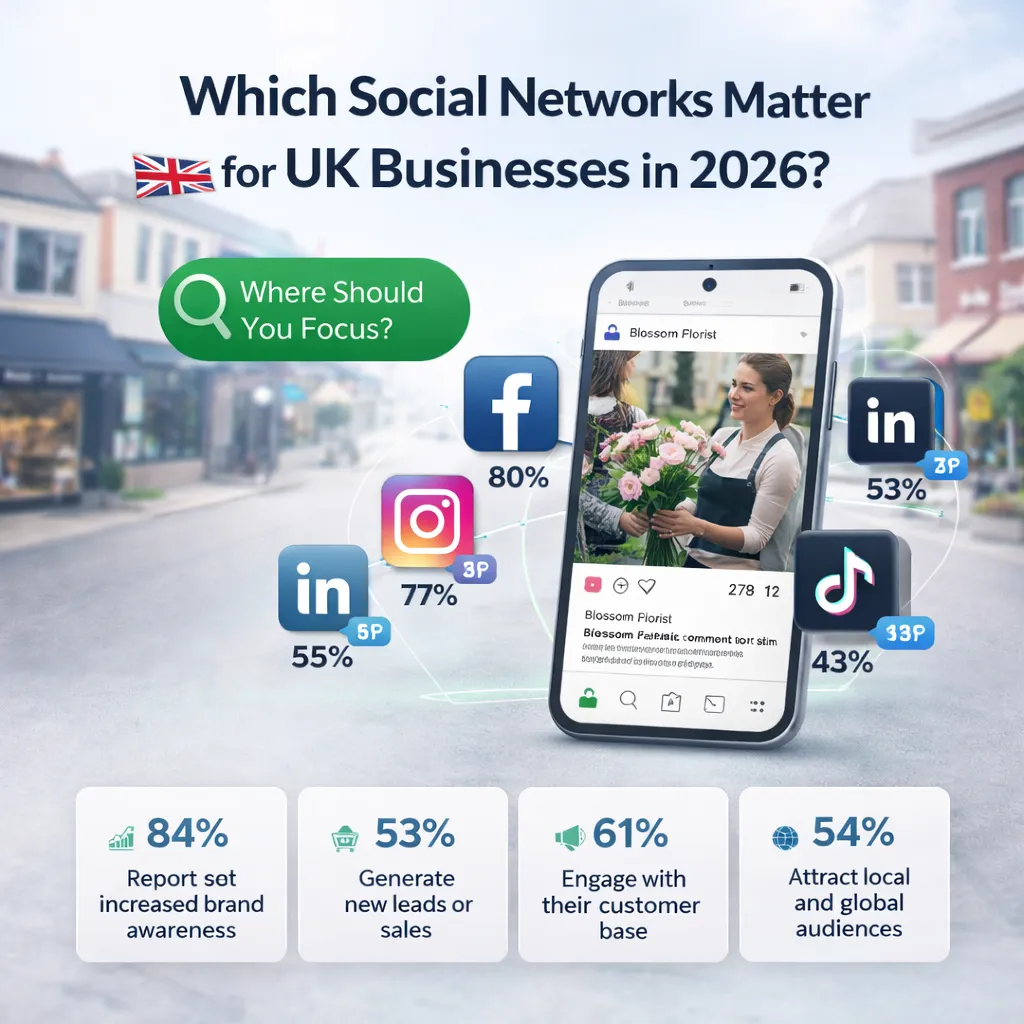
With dozens of social media platforms competing for attention — and time budgets always limited — the most important strategic decision in social media marketing for UK businesses is not how to post better content. It is where to post it. Spending 10 hours per week creating content for the wrong platforms is not just inefficient — it is an opportunity cost that could be invested in channels delivering genuine business return. This guide breaks down the current landscape of social media platforms for UK B2B and B2C businesses and provides clear guidance on where your marketing investment is most likely to deliver results. LinkedIn: The Undisputed B2B Champion For business-to-business marketing in the UK, LinkedIn is unequivocally the most valuable social media investment. With over 35 million UK members — the majority of whom are professionals, decision-makers, and business owners — LinkedIn provides unmatched access to your B2B target audience. Organic LinkedIn content from company pages and personal profiles reaches a far higher percentage of followers than equivalent Facebook posts, and LinkedIn’s advertising platform offers unparalleled professional targeting precision. Every professional services company, IT consultancy, recruitment agency, and B2B technology business should be investing consistently in LinkedIn. The platform rewards regular, genuine thought leadership — not just promotional content. Instagram: Visual Brands and Consumer Businesses Instagram remains the most visually powerful platform for consumer-facing UK businesses with strong visual brand assets. Retail, hospitality, food and beverage, fashion, beauty, interior design, and lifestyle brands consistently achieve strong engagement and conversion from Instagram. For B2B businesses with less inherently visual content, the effort-to-return ratio on Instagram is significantly lower. Facebook: Reliable Reach for Local and Community Businesses Despite declining organic reach in recent years, Facebook remains highly effective for local UK businesses — particularly those targeting specific communities, age demographics, or geographic areas. Facebook Groups are particularly powerful for building engaged communities around specific interests or local areas. Facebook Ads remain one of the most cost-effective paid social advertising platforms for consumer businesses. TikTok: Growing Relevance for Consumer Brands TikTok’s UK user base has grown significantly and now includes a broad age range beyond its initial teenage demographic. For consumer brands willing to invest in genuine, creative short-form video content, TikTok offers exceptional organic reach — the algorithm amplifies quality content regardless of follower count. For B2B businesses, TikTok remains a low-priority channel in most markets. Twitter / X: Declining But Still Relevant for Specific Industries Twitter/X has undergone significant changes and some audience loss since its acquisition by Elon Musk in 2022. However, it remains relevant for real-time commentary, tech industry engagement, customer service, and journalists. For most UK small businesses, it is a lower-priority platform compared to LinkedIn, Instagram, and Facebook. How Techcited Ltd Manages Social Media Marketing Techcited Ltd creates and manages social media marketing programmes for UK businesses — from strategy and content creation to community management and performance reporting. We focus on the channels that genuinely drive results for your specific business type and audience. Frequently Asked Questions Q: How many social media platforms should a UK small business manage? A: Most small businesses have the resource to manage 2 platforms well. Spreading effort across 4–5 platforms typically results in inconsistent posting and mediocre content on all of them. Choose the 1–2 platforms where your customers are most active and invest in those fully. Q: Is organic social media marketing still effective in 2026 or do you need to pay for reach? A: Organic reach has declined on most platforms for business pages. However, LinkedIn personal profiles and quality content on Instagram and TikTok still achieve significant organic reach. A combination of strong organic content and targeted paid promotion consistently outperforms either approach alone. Q: Can Techcited Ltd create social media content as well as manage posting and engagement? A: Yes. Our social media service includes content strategy, graphic design, caption writing, scheduling, community management, and monthly performance reporting. Ready to get started?Let Techcited Ltd manage your social media marketing and build a genuine audience that drives real business results. Get in touch for a free social media strategy consultation. Visit: Digital marketing agency

SEO vs PPC: Which Should Your Small Business Invest In for 2026?
Uncategorized

SEO vs PPC: Which Should Your Small Business Invest In for 2026?

One of the most common digital marketing questions asked by UK small business owners is: should I invest in SEO or PPC? Both channels can drive significant website traffic and generate valuable leads — but they operate differently, suit different situations, and produce results on different timelines. This guide provides an honest, balanced comparison to help you make the right investment decision for your business. Understanding SEO (Search Engine Optimisation) SEO is the practice of optimising your website and content to rank higher in Google’s organic (unpaid) search results. When someone searches for a service you offer, SEO aims to place your website on Page 1 of Google’s results — without paying for each click. The major advantage of SEO is that organic traffic is free once achieved. A Page 1 ranking for a high-intent keyword (e.g., ‘IT consultant Leicester’) generates a continuous stream of relevant visitors at no per-click cost. However, SEO is a long-term investment — competitive keywords typically take 3–6 months of consistent effort to achieve meaningful ranking improvement. Understanding PPC (Pay-Per-Click Advertising) PPC — primarily Google Ads Search — allows you to pay to appear at the top of search results for specific keywords, immediately. You pay only when someone clicks your ad. The cost per click varies from under £1 for low-competition local terms to £20–£50+ for highly competitive national keywords. PPC delivers traffic from day one — immediately after campaign setup and activation. It also provides precise control over budget, targeting, timing, and messaging. However, the traffic stops the moment you stop paying. Unlike SEO, PPC builds no permanent asset. Head-to-Head Comparison Speed of Results PPC: immediate. SEO: 3–6+ months for competitive terms. For businesses that need results now — new businesses, seasonal campaigns, product launches — PPC delivers faster. For established businesses planning for long-term growth, SEO delivers superior long-term returns. Cost per Acquisition Over time, well-optimised SEO typically delivers a lower cost per lead than PPC, because organic traffic is free. In the short term, PPC’s immediate results often justify the per-click cost during the period SEO is building momentum. Scalability PPC scales immediately with budget — spend more, get more traffic. SEO scales more slowly but sustainably — rankings and authority build incrementally. For high-growth phases, PPC provides the flexibility to accelerate quickly. The Honest Answer: Use Both For most UK small businesses with realistic digital marketing budgets, the optimal approach is to invest in SEO as the long-term foundation while using PPC strategically for immediate lead generation, seasonal campaigns, and keyword gaps where organic rankings are not yet established. Techcited Ltd’s digital marketing service integrates SEO, content strategy, and Google Ads management — ensuring our clients generate leads from the day they engage us while building sustainable organic authority for the long term. Frequently Asked Questions Q: How much does Google Ads cost for a UK small business? A: A realistic minimum Google Ads budget for a UK small business is £300–£500 per month in ad spend, plus management fees. For professional services and technology companies targeting competitive keywords, £700–£2,000 per month delivers more meaningful scale. Q: Can I do SEO myself or do I need an agency? A: Basic technical SEO and content creation can be done in-house with the right knowledge and tools. However, the time investment is significant, and the technical aspects of SEO — backlink building, technical audits, and Core Web Vitals optimisation — benefit significantly from professional expertise. Q: How does Techcited Ltd structure its SEO and PPC services? A: We offer SEO and Google Ads management as individual services and as an integrated Digital Marketing Package. Contact us to discuss which approach suits your business goals and budget. Ready to get started? Get expert SEO and PPC management for your UK business from Techcited Ltd. We build integrated digital marketing strategies that deliver results from day one and grow over time. Visit: Digital marketing agency

What Is Digital Transformation and Why Does Your UK Business Need It Now?
Uncategorized

What Is Digital Transformation and Why Does Your UK Business Need It Now?

‘Digital transformation’ has become one of the most used — and most misunderstood — phrases in the UK business lexicon. For some, it conjures images of expensive enterprise technology programmes with uncertain returns. For others, it is a vague aspiration that sounds impressive in strategy documents but lacks concrete meaning. In reality, digital transformation is simply the process of using technology to improve how your business operates, delivers value to customers, and competes in your market. It is not a single project with a start and end date. It is an ongoing evolution — and for most UK businesses, starting it sooner is almost always better than waiting. The Practical Meaning of Digital Transformation Digital transformation looks different for every business, but at its core it involves: replacing manual, paper-based, or disconnected processes with digital, integrated, and automated equivalents; using data more effectively to understand your customers, operations, and performance; delivering your products and services through digital channels as well as (or instead of) traditional ones; and building a digital-first organisational culture that embraces technology as a competitive tool. 5 Signs Your UK Business Needs to Accelerate Its Digital Transformation 1. Your team wastes time on manual, repetitive data entry If information that exists in one system is regularly being manually copied into another, you are paying for inefficiency that technology can eliminate almost entirely through integration and automation. 2. You are losing customers to more digitally capable competitors If competitors are offering online booking, self-service portals, faster response times, or more personalised experiences — and you are not — digital transformation is a directly competitive priority. 3. You cannot easily access or act on your business data If answering basic business questions (how many customers did we acquire last month? what is our most profitable product line?) requires significant manual effort or is simply not possible, your data architecture needs modernisation. 4. Your systems cannot support remote or hybrid working effectively If your team’s productivity is significantly reduced when not in the office due to on-premise systems, paper-based processes, or poor cloud adoption, your technology is constraining your talent strategy. 5. Customer experience is being limited by your technology If customers face friction — in placing orders, making enquiries, receiving updates, or resolving issues — because of technology limitations, those are direct revenue and retention risks. Where to Start Your Digital Transformation Journey The most common mistake in digital transformation is trying to do too much simultaneously. Start by identifying the 2–3 processes in your business that cause the most friction, consume the most time, or create the most customer experience problems. Transform these first, measure the results, and use that evidence to build the business case for the next phase. Techcited Ltd’s Digital Transformation Service Techcited Ltd supports UK businesses at every stage of their digital transformation journey — from initial assessment and roadmap development through to technology implementation, integration, and ongoing optimisation. Frequently Asked Questions Q: Is digital transformation only relevant for large businesses?A: No. Small and medium businesses often benefit most from digital transformation because the efficiency gains, relative to their size, are proportionally larger. A small business that automates its invoicing and reporting, for example, frees up a significant percentage of its total administrative capacity. Q: What is the difference between digitisation and digital transformation?A: Digitisation is simply converting analogue processes to digital form (e.g., scanning paper documents). Digital transformation is broader — it involves redesigning how you work, deliver value, and compete using technology as a strategic enabler, not just a replacement for paper. Q: How does Techcited Ltd support businesses beginning their digital transformation?A: We start with a structured assessment of your current systems, processes, and pain points, then develop a prioritised transformation roadmap. We then support implementation, integration, and team training — acting as your technology partner throughout the journey. Ready to get started? Start your digital transformation journey with the right partner. Techcited Ltd provides practical, results-focused digital transformation support for UK businesses of all sizes. Visit: Digital Marketing Agency

Digital Marketing Strategy for Small Businesses in Leicester
Uncategorized

Digital Marketing Strategy for Small Businesses in Leicester: A 2026 Guide

For a small business in Leicester, having a clear, actionable digital marketing strategy is no longer optional — it is the foundation on which sustainable growth is built. Whether you are a professional services firm, a retail business, a restaurant, or a technology company, your potential customers are searching for what you offer online, comparing providers, and making decisions based on the quality of your digital presence. This guide provides a practical six-step digital marketing framework specifically designed for Leicester small businesses looking to build consistent, measurable online growth in 2026. Step 1: Define Your Target Audience With Precision Every effective marketing strategy starts with a clear understanding of who you are marketing to. Generic messaging that attempts to appeal to everyone ends up resonating with no one. Create specific customer personas that describe your ideal customers by demographics, job roles, challenges, goals, and the online platforms where they spend their time. For a Leicester business, your target audience analysis should also include geographic nuance — considering whether your customers are local (within the city), regional (East Midlands), national, or a mix. This determines which channels and what level of local SEO investment is appropriate. Step 2: Establish Your Digital Marketing Foundations Before investing in paid advertising or content marketing, ensure your foundations are solid. This means: a fast, mobile-first professional website, a fully completed and verified Google Business Profile, consistent NAP (Name, Address, Phone) information across all online directories, and active social media profiles on the platforms where your customers spend time. Step 3: Invest in Local SEO For most Leicester small businesses, local SEO — optimising for searches with geographic intent (e.g., ‘web developer Leicester’, ‘accountant near me’) — offers the highest near-term return on digital marketing investment. Local SEO drives qualified, purchase-intent visitors from people in your geographic area who are actively looking for your services. Key local SEO activities include: optimising and consistently updating your Google Business Profile, building local citations in relevant UK directories (Yell, Thomson Local, Bing Places), earning reviews from genuine customers, and creating location-specific content on your website. Step 4: Develop a Content Strategy Consistent, valuable content builds your brand’s authority and drives organic search traffic over time. For most small businesses, a blog publishing 2–4 posts per month covering the topics your potential customers search for is both achievable and highly effective. Each post should target a specific keyword, provide genuine value, and include a clear call-to-action. Step 5: Build and Grow Your Social Media Presence Choose 1–2 social media platforms based on where your target customers are most active — not where you feel most comfortable. For B2B Leicester businesses, LinkedIn is typically the highest-value platform. For consumer-facing businesses, Instagram and Facebook generate the most direct engagement. Publish consistently rather than sporadically — 3–4 posts per week at consistent times outperforms daily posting for a week followed by silence. Step 6: Add Paid Channels Strategically Once your organic foundations are established, paid digital advertising can accelerate growth significantly. Google Ads (Search) targets people actively searching for your services. Facebook and Instagram Ads build awareness and retarget website visitors. Even small budgets (£200–£500 per month) can generate significant results when campaigns are well-structured and managed. Techcited Ltd: Your Leicester Digital Marketing Partner Techcited Ltd provides comprehensive digital marketing services for small and medium businesses across Leicester and the UK. From SEO and content strategy to social media management and paid advertising, our team delivers measurable results that grow your business online. Frequently Asked Questions Q: How long does it take to see results from digital marketing for a Leicester business?A: SEO typically takes 3–6 months to deliver significant organic traffic growth. Social media engagement builds over 2–3 months of consistent activity. Paid advertising can deliver results from week one. A comprehensive strategy combining all channels delivers the fastest sustainable growth. Q: Should a small Leicester business focus on local or national digital marketing?A: Start with local. Ranking for ‘your service + Leicester’ or ‘your service + East Midlands’ is significantly more achievable than national competition, delivers highly qualified local leads, and builds the credibility foundation for broader national expansion. Q: How much should a small Leicester business invest in digital marketing per month?A: A realistic starting budget for a comprehensive small business digital marketing programme in Leicester is £500–£1,500 per month, covering SEO, content, social media management, and a basic paid advertising component. Returns on this investment compound significantly over time. Ready to get started? Ready to build a digital marketing strategy for your Leicester business? Contact Techcited Ltd for a free digital marketing consultation and let us help you grow online. Visit: Digital Marketing Agency

How to Choose the Right Recruitment Agency in Leicester A 2026 Guide
Uncategorized

How to Choose the Right Recruitment Agency in Leicester: A 2026 Guide

Finding the right recruitment agency in Leicester can be the difference between filling a role in days and spending months wading through unsuitable applications. With dozens of agencies competing for your attention, knowing what to look for — and what to avoid — is essential for any business owner or HR manager in 2026. This guide walks you through exactly how to evaluate and choose a recruitment agency that will genuinely serve your business needs, whether you are hiring for a single specialist role or building an entire team. Why Using a Recruitment Agency in Leicester Makes Business Sense Leicester has one of the most diverse and rapidly growing business communities in the East Midlands. From technology start-ups and logistics firms to healthcare providers and professional services companies, the demand for skilled talent is consistently high — and competition for top candidates is fierce. A well-connected local recruitment agency understands the Leicester talent market intimately. They know which skill sets are readily available, which roles typically take longer to fill, and which compensation packages are required to attract the best candidates. This local knowledge saves you significant time and reduces the risk of a costly mis-hire. Beyond local expertise, working with an agency means you gain immediate access to a pre-screened pool of active and passive candidates — people who may not be responding to job boards but who are open to the right opportunity when it is presented correctly. The 7 Key Criteria for Choosing a Recruitment Agency 1. Sector Specialisation Always verify that the agency has genuine experience recruiting in your industry. A generalist agency may lack the technical understanding needed to accurately assess candidates for specialist roles such as software developer, data analyst, or IT project manager. Ask for evidence of recent placements in your sector. 2. Candidate Pool Quality Ask how the agency sources candidates. Do they rely solely on job boards, or do they proactively headhunt passive candidates through LinkedIn and professional networks? The best agencies maintain a warm talent pool and can present shortlisted candidates within days, not weeks. 3. Screening and Vetting Process A quality agency does not simply forward CVs. They conduct structured interviews, verify qualifications and employment history, assess cultural fit, and provide you with a brief candidate profile alongside each CV. If an agency cannot explain their screening methodology, consider it a red flag. 4. Transparent Pricing and Fee Structures Recruitment agency fees are typically calculated as a percentage of the candidate’s first year salary — usually between 10% and 20% for permanent placements. Ensure the fee structure is clear, written, and includes details of any rebate or guarantee period should the placement not work out. 5. Communication and Responsiveness You should never be left wondering what is happening with your vacancy. Your recruitment consultant should provide regular updates, be reachable when you need them, and keep you informed at every stage. Poor communication early in the relationship is unlikely to improve once you are committed. 6. Technology and Modern Recruitment Tools In 2026, the best agencies use AI-assisted CV screening, applicant tracking systems, and video interview platforms to improve both speed and quality. An agency that still relies entirely on paper-based processes or email chains is operating well behind the curve. 7. Reviews, References, and Track Record Check Google reviews, Trustpilot, and LinkedIn recommendations. Ask the agency for references from businesses similar to yours. A strong track record in your sector, supported by verified client feedback, is one of the strongest signals of a reliable recruitment partner. Red Flags to Watch Out For Why Techcited Ltd Is Leicester’s Trusted Recruitment Partner At Techcited Ltd, we specialise in IT and technology recruitment across Leicester and the wider UK. Our team combines deep sector knowledge with a rigorous candidate vetting process, ensuring that every candidate we present genuinely meets your technical and cultural requirements. We work closely with businesses of all sizes — from agile start-ups to established enterprises — and our consultants are available to support you from the initial vacancy brief through to successful onboarding. Our transparent fee structures, genuine sector expertise, and 5-star Google rating reflect our commitment to delivering results. Whether you are looking to hire a software developer, project manager, data analyst, or technical support specialist, our team can help you find the right person — quickly, professionally, and cost-effectively. Frequently Asked Questions Q: How long does it typically take to fill a role through a recruitment agency in Leicester?A: For most professional and IT roles, a well-prepared recruitment agency should be able to present a shortlist of qualified candidates within 5–10 working days. Highly specialist roles may take 2–4 weeks. Providing a detailed job brief and responding promptly to candidate CVs significantly speeds up the process. Q: What is the typical recruitment agency fee for permanent placements in the UK?A: Permanent placement fees generally range from 10% to 20% of the candidate’s first year base salary. Many agencies offer a rebate or replacement guarantee — typically 8 to 12 weeks — should the hire leave or be released within that period. Q: Can a recruitment agency in Leicester help with remote and hybrid roles?A: Yes. Post-pandemic, most UK recruitment agencies actively manage vacancies for remote and hybrid positions and have candidate databases spanning the entire UK, not just their local area. Techcited Ltd recruits nationally for remote technology roles. Ready to get started? Ready to find your next great hire? Contact the Techcited Ltd recruitment team today for a free consultation and let us help you source the right talent — fast. Visit: Recruitment agency in leicesteruk

Scroll to Top