 Skip to content
The cost of a failed hire is well documented — typically 1 to 3 times the employee’s annual salary. What is less frequently discussed is how much of that failure is caused not by the wrong hire, but by poor onboarding. Research by Glassdoor found that organisations with a strong onboarding process improve new hire retention by 82% and productivity by over 70%.
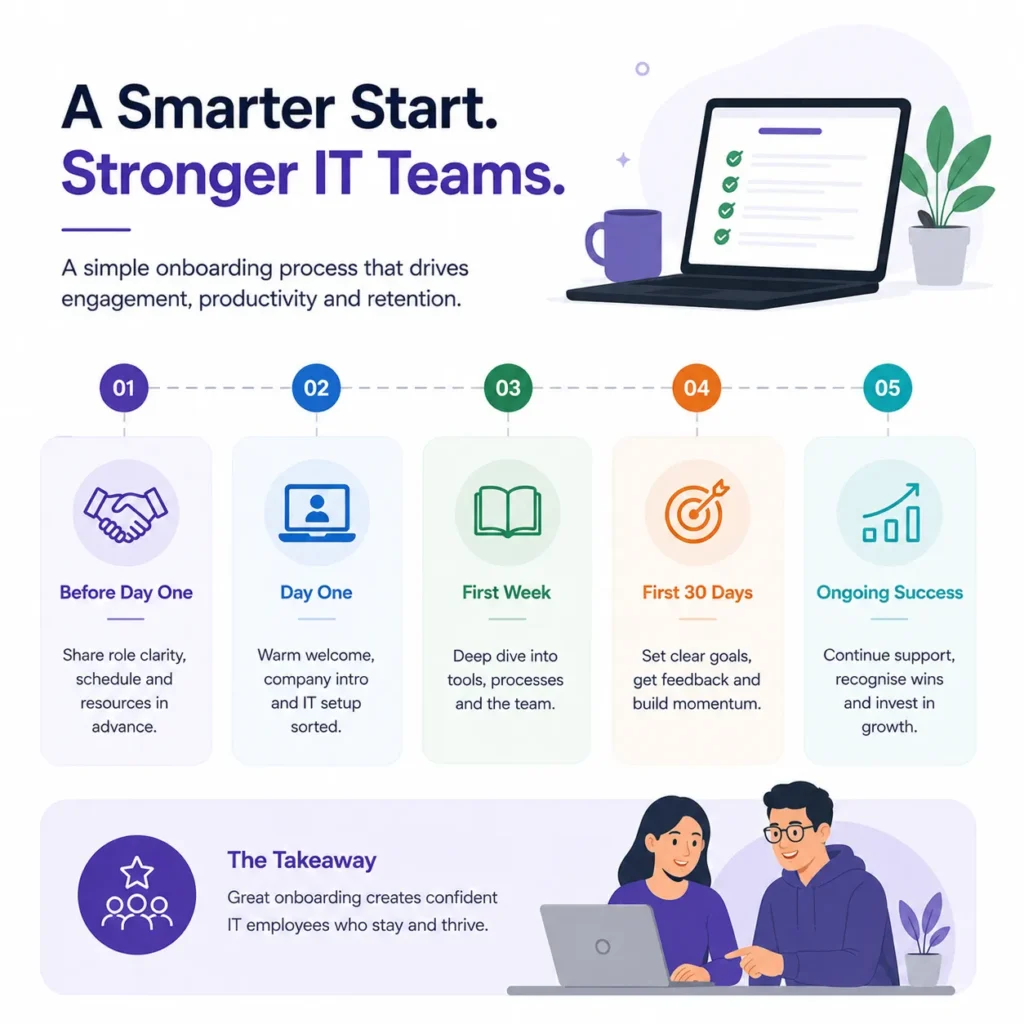
For IT and technology roles — where ramp-up time is particularly significant — effective onboarding is a direct driver of business performance. This step-by-step guide provides a practical framework for UK businesses.
Before Day One: Preboarding
- Send a welcome email within 24 hours of offer acceptance, including the start date, first-day logistics, and a brief introduction to the team
- Ensure all IT equipment (laptop, software licences, access credentials) is provisioned before the start date
- Assign a buddy or onboarding mentor from the technical team
- Share any reading materials, documentation, or codebase introductions that will help the new hire hit the ground running
Week One: Orientation and Relationships
The first week should focus on building relationships, not delivering tasks. New employees need to understand the organisation’s structure, culture, communication norms, and team dynamics before they can contribute effectively. Arrange brief introductory calls with all key stakeholders, including other teams whose work intersects with theirs.
Provide a clear overview of the tech stack, existing systems, current projects, and immediate priorities. Avoid overwhelming new team members with information — space sessions across the week with time for independent exploration.
Month One: Structured Learning and Early Wins
Set clear, achievable goals for the first 30 days. For a developer, this might mean completing their first meaningful feature contribution. For an IT manager, it might mean reviewing the current infrastructure and producing a brief assessment. Early wins build confidence, demonstrate progress, and signal to the new hire that their contribution is valued.
The 30-60-90 Day Framework
A formal 30-60-90 day plan — with defined goals, success metrics, and review checkpoints at each stage — provides structure for both the new employee and their manager. At 90 days, conduct a formal review that celebrates progress, addresses any concerns openly, and sets the trajectory for the next quarter.
How Techcited Ltd Supports Post-Placement Success
Techcited Ltd does not consider our role finished at placement. We follow up with both the placed candidate and the client business at 1 week, 1 month, and 3 months to ensure the integration is progressing well. If any concerns arise, our consultants are available to advise and support both parties.
Frequently Asked Questions
Q: How long does it typically take for a new IT employee to become fully productive?
A: For most technical roles, a new employee reaches full independent productivity between 3 and 6 months. Strong preboarding, a structured onboarding plan, and an assigned technical mentor can reduce this timeline significantly.
Q: What is the single most important factor in new IT employee retention?
A: Research consistently points to the quality of the direct manager relationship as the strongest predictor of early retention. New employees who feel supported, valued, and genuinely included by their manager are significantly more likely to remain.
Q: Should onboarding be the same for contract/temporary staff as permanent employees?
A: While shorter by necessity, contract staff onboarding should still include clear access to systems, introduction to key contacts, and a brief overview of the project and team context. Neglecting contractor onboarding leads to slower integration and lower productivity.
Ready to get started?
From recruitment through to successful onboarding, Techcited Ltd supports your entire talent journey. Contact us to find out more about our end-to-end IT recruitment service.
